Walk down the pet food aisle and it's easy to feel you need a degree in nutrition. The good news is that the basics are fairly simple. Cats have very particular needs, and once you know what they are, choosing and portioning food gets a lot easier.
1. Cats are meat eaters by design
Cats are obligate carnivores. Their bodies are built to run on animal protein and fat, and they need several nutrients that come mainly from animal tissue, including taurine (important for the heart and eyes), vitamin A and arachidonic acid. Unlike dogs or people, cats can't make enough of these themselves.
That's why cats shouldn't live on a vegetarian diet or on dog food. Dog food can look similar, but it isn't formulated for a cat's needs.
2. Look for "complete and balanced"
The most useful words on a pet food label are "complete and balanced" (or simply "complete"). They mean the food contains everything a cat needs and can be fed on its own. Foods labelled "complementary", along with most treats, are extras and don't cover all a cat's needs.
Choose a food for your cat's life stage. Kittens need more energy and nutrients for growth, and some older cats do better on a senior diet. Price and fancy ingredient lists matter much less than a complete and balanced label from a reputable maker.
3. Wet, dry or both?
Both can work well. What matters is that the food is complete and the amount is right.
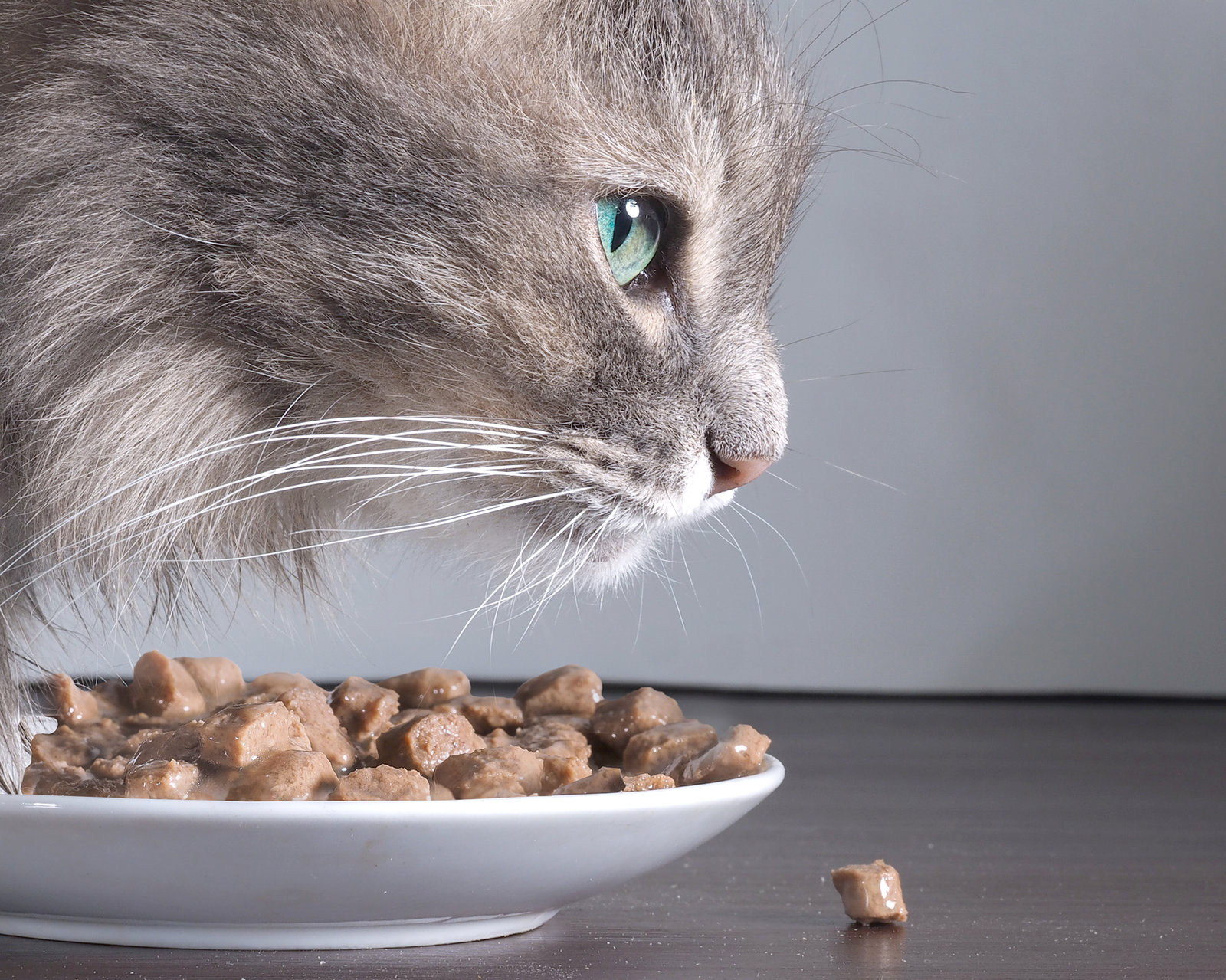
- Wet food contains a lot of water, which helps cats that don't drink much. It is often more appealing, but costs more and shouldn't sit out in the bowl for hours.
- Dry food is convenient and keeps well. It is energy dense, though, so it is easy to overfeed.
- A mix suits many cats and their owners.
Some cats, for example those with urinary or kidney problems, may do better with more moisture in their diet. Your vet can advise if that applies to your cat.
4. How much, and how often?
The feeding guide on the pack is a starting point, not a rule. Every cat's needs depend on age, activity and whether they are desexed.
A better guide is your cat's body condition. The WSAVA nutrition guidelines use a 9-point body condition score, where 5 is ideal: you can feel the ribs under a slight layer of fat, and you can see a waist behind the ribs when you look down from above.
- Weigh out the daily amount and split it into several small meals. Cats naturally eat little and often.
- Puzzle feeders and treat balls slow fast eaters down and give them something to do.
- Keep treats to less than 10% of daily calories, and take them out of the main meal allowance.
- Weigh your cat every month or two. Gradual weight gain or loss is easy to miss.
If your cat needs to lose weight, talk to your vet first. Cats shouldn't be put on a crash diet.
5. Don't forget water
Cats descend from desert-dwelling ancestors and often don't feel very thirsty. You can encourage drinking by:
- placing water bowls away from food bowls and the litter tray
- offering wide, shallow bowls, filled to the brim
- having more than one water station around the house
- trying a pet water fountain, which some cats love
Suddenly drinking a lot more than usual is worth mentioning to your vet.
6. Foods to keep off the menu
- Cow's milk. Many adult cats can't digest lactose well and get an upset stomach.
- Onions, garlic and chives, fresh, cooked or powdered. They can damage red blood cells.
- Chocolate, caffeine and alcohol.
- Cooked bones, which can splinter.
If you think your cat has eaten something harmful, call your vet straight away rather than waiting for signs.
7. Change food slowly
Switch to a new food gradually over a week or so, mixing a little more of the new food into the old each day. Sudden changes can upset some cats' stomachs, and some cats will simply refuse to eat. A cat that stops eating shouldn't be left to "come round to it". Cats don't cope well with going without food, so talk to your vet if your cat isn't eating.
Good food, less guesswork
Feeding a cat well comes down to a complete diet, sensible portions, plenty of water and an eye on body shape. At Nelson Cat Hotel our standard diet is Royal Canin. If your cat is on a special or sensitive diet, bring enough of their usual food for the whole stay, and let us know their routine when you book. If your cat needs daily medication with meals, our article on medication during a cattery stay explains what to prepare.